For more information about this programme, please contact:
Email: nbs_fleximasters@ntu.edu.sg
FlexiMasters in Accounting Analytics and Digital Forensics
As the accountancy sector continues to transform, accounting professionals must upskill so that they can harness emerging technologies like AI, machine learning, and data analytics to greatly enhance efficiency and deliver real-time insights to assist in decision-making and fraud detection.
The FlexiMasters in Accounting Analytics and Digital Forensics course aims to equip current and aspiring accounting professionals with in-demand skills such as data analytics, data visualisation, and digital forensics.
The course curriculum for this programme has been updated to ensure the currency of course content and resources.
Course curricula pending final approval from SkillsFuture Singapore (SSG).
| Module | Objective |
|---|---|
Analytics Strategy and Techniques | Analytics, Data Science and Machine Learning are transforming business, societies, and governments. In this module, you will learn the important concepts and techniques with real-world applications and understand how data-driven strategies
impact the world. Learning Outcomes
|
AI in Accounting & Finance | Expand your digital literacy with analytical thinking, critical thinking and reasoning skills. In this module, you will create state-of-the-art predictive and prescriptive analytics models with AI that will help automate the processes in accounting and finance. Through hands-on projects and business cases, you will gain insights into how new technologies can be implemented to enhance business outcomes. By the end of this course, you will develop skills to apply these technologies to drive innovation and make data-driven decisions. Learning Outcomes
|
Investigative Forensics Accounting and Digital Forensics | The module will introduce you to the concept of forensic accounting, as well as various investigation techniques and tools. You will explore how investigative analytics are applied to identify red flags and unusual activities, support/dismiss
Using real-life cases and a hands-on learning approach, you will learn the practical application of tools and technologies in a fraud investigation. Learning Outcomes
|
Environmental, Social and Governance (ESG) and Sustainability Reporting | This module aims to meet the increasing and urgent demand for companies to provide high-quality, transparent, reliable and comparable sustainability reporting and disclosures which meet the needs of investors and other financial market learners. You will examine the main features of the sustainability reporting framework and understand how the concept of materiality shapes the variation in sustainability issues across different industries. Learning Outcomes
|
Predictive Analytics: A Managerial Emphasis | Using business cases, you will learn to see the managerial perspective in developing a business analytical case to obtain the explanatory or predictive results. You will develop skills in drawing inferences from data by using statistical and data mining tools to guide decision-making for various business problems, such as financial statement fraud detection, analysis of internal controls deficiencies, credit risk analysis, customer segmentation, forecasting and trend analysis. Learning Outcomes
|





- Provide you with better access to postgraduate-level training so you can personalise your learning pathway and upskill/reskill in a timely fashion.
- Enable you to build on your experience, transition and prepare for a career shift, and become future-ready in an ever-changing employment market.
- Earn credits that you can stack towards a postgraduate degree at Nanyang Business School, Singapore
1. Our programme consists of five advanced business courses, worth a total of 15 academic units (AUs):
- Five courses, each worth three AUs
2. Each course comprises:
- 39 hours (including in-class component, online self-paced learning and assessment hours)
- You are required to attain a minimum of GP 2.5, a C+ grade equivalent, to be awarded the AU for each course
3. Mode of class delivery:
- The default mode of delivery is in-person classes, with considerations for online classes when necessary
4. Upon graduating, the following qualifications will be awarded:
- FlexiMasters will be awarded to students attaining 15 AUs, with a minimum GP of 2.5, a C+ grade equivalent, from each considered course
- A Graduate Certificate will be awarded to students attaining 9 AUs, with a minimum GP of 2.5, a C+ grade equivalent, from each considered course
- While no pre-requisites are needed to enroll in the course/s, participants with relevant background and/or experience may have a better understanding of their course content.
FlexiMasters in Accounting Analytics and Digital Forensics can be stacked into the MSc in Accountancy (with Data Analytics specialisation) and similarly accredited under the following conditions:
- Up to 12 Academic Units (AUs) from the five courses of FlexiMasters may be transferred to MSc in Accountancy (with Data Analytics specialisation).
- The AUs earned from FlexiMasters courses are valid for up to five (5) years for transfer of credits to a relevant/adjoining Master's programme.
- Transfer of credits is by application and will be assessed and approved by the relevant Programme Owners.
- Transfer of credit eligibility will be reviewed by the postgraduate programme office upon application for a Master’s degree programme, subjected to all prevailing policies at NBS and NTU at that time.
- The minimum Grade Point eligible for transfer of credits is 2.5. The Programme Owners may recommend a higher Grade Point for transfer of credits.
- AUs from Graduate or FlexiMasters Certificate that are approved for transfer of credits will not be included in the
computation of Cumulative Grade Point Average for the Master’s programme. - The course must not have been used for exemption/transfer of credits into another programme.
- FlexiMasters Alumni who are successful Master's programme applicants may enjoy course fee discount and subsidy schemes for the Master's programme.
Admission to Full Nanyang Business School Master's Programme
Participants have to meet all required admission standards of the selected Master's programme.
Next intake: 9 Jan 2027 (TBC)
Please register your interest here for the next intake.
| Module | Class Dates |
|---|---|
| Analytics Strategy and Techniques | TBC |
| AI in Accounting and Finance | |
| Investigative Forensic Accounting and Digital Forensics | |
| Predictive Analytics: A Managerial Emphasis | |
| Environmental, Social and Governance (ESG) and Sustainability Reporting |
Important Notes
- If an intake is fully enrolled, your application will be considered for the next available intake.
- Updates to your application status will be sent to you at least 6 weeks before the programme commences.
- As seats are limited, please send in your application early to avoid disappointment.
Programme Attendance
- Successfully admitted participants have to commit to the published schedule.
- The course duration is 30 weeks, with four Saturday classes per module.
- All classes are held in-person only, from 8.30am to 5.30pm at the Lifelong Learning Institute (near Paya Lebar MRT). Only the last day of class will be held at NTU Nanyang Business School, Wee Cho Yaw Plaza.
- No make-up classes for absentees.
- Mandatory attendance is required for programme info session and details will be provided upon successful admittance into the programme.
- Nanyang Technological University reserves the right to change the date, time, venue, and mode of delivery of classes due to unforeseen circumstances or prevailing government advisory.
| Full Programme Course Fees in SGD (fees and funding quoted below are subject to revision) | |||
|---|---|---|---|
| Fees BEFORE funding & GST | Fees AFTER funding & 9% GST | ||
| Singapore Citizens (aged 21-39) / PR (aged ≥21) Up to 70% SSG Funding | $22,500.00 | $7,357.50 | |
| Singapore Citizens (aged ≥40) MCES1 - Up to 90% SSG Funding | $22,500.00 | $2,857.50 | |
| SME-sponsored Singapore Citizens / PR ETSS2 - Up to 90% SSG Funding | $22,500.00 | $2,857.50 | |
| NTU Alumni Fee payable after 70% SSG Funding and use of $1,600 **NTU Alumni Course Credits | $22,500.00 | $6,834.30 | |
2. Enhanced Training Support for Small & Medium Enterprises (ETSS) Scheme
Funding/Programme Requirements
- You must achieve a minimum of 75% attendance for each module.
- You must complete and pass all assessment components.
You do not need to contact SkillsFuture Singapore (SSG) to apply for the above funding. Upon your successful admission to the programme, NTU will handle the funding administrative for all applicants. Billing is by module on the nett amount after funding and GST. Full payment is to be made before the start of module.
SSG funding is limited in duration and subject to the prevailing conditions of the funding agencies.
SkillsFuture Credit
Singapore Citizens, aged 25 and above, and self-sponsored, may use their SkillsFuture Credit to defray full or part of the nett course fee.
Singapore Citizens, aged 40 and above, and self-sponsored, may use their NEW Top-up of $4,000 SkillsFuture Credit (Mid-Career) to defray full or part of the nett course.
You may check your SkillsFuture Credit balance by logging into MySkillsFuture.sg.
**NTU Alumni Course Credits
All self-sponsored NTU/NIE alumni may utilise their Alumni Course Credits (ACCs) as direct discounts on the course fee before any applicable eligible funding is applied.
For more info on ACCs, please click here.
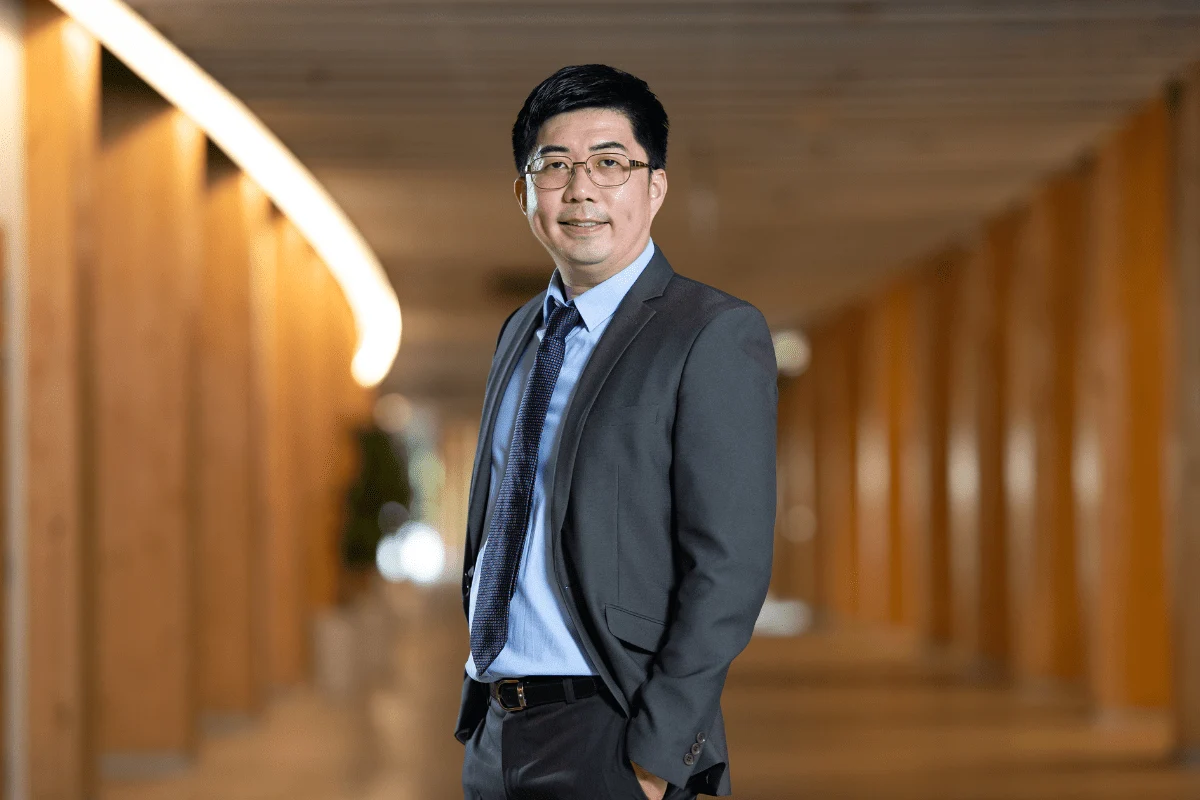
Transforming Audit: From Reactive to Predictive with Data Analytics
— Daniel Ng, Analytics Advocate
1. What is the course schedule and duration of the FlexiMasters programme?
Please look under ‘Course Schedule & Venue’ for the schedule and duration of the classes.
2. Will I be able to pursue more than 1 FlexiMasters programme?
There are no restrictions but it’s advisable to take up 1 FlexiMasters at a time as the schedule might overlap. Eventually, all of the applications will be reviewed by the Selection Committee.
3. I’m only interested in one of the modules in the FlexiMasters programmes. Will I be able to pursue that module?
FlexiMasters is a bundled programme. When you apply for a FlexiMasters programme, it will be considered that you’re applying for all the modules.
4. How will the credits earned from the FlexiMasters contribute to an NBS Master’s programme?
FlexiMasters is a stackable programme where credits earned are eligible for credit transfer to an NBS Master’s programme. However, participants are required to meet the admission standards of their selected NBS Master’s programme. For more information about the NBS Master’s Programme, you may visit this link: https://www.ntu.edu.sg/business/admissions/graduate-studies
5. What is the course assessment like?
Course assessment will differ from module to module. This will be determined by the respective teaching faculty. Assessment components will be shared upon successful admittance to the programme. Some of the assessment components may consist of Individual coursework, Group coursework, Quizzes and Class Participation.
6. When will the course outlines be made available?
Course outlines will be shared upon successful admittance to the FlexiMasters programme.
7. Can I still use my Alumni Credits? When do my Alumni Credits expire? Can I check the balance of my Alumni Credits?
Kindly email PACE regarding queries of your Alumni Credits: pace@ntu.edu.sg
8. Can I get a rough idea of the difficulty level?
These are advanced graduate Business courses embedded with academic rigour necessary for the academic units in the programme. Due diligence is required to pass the modules in the programme.
9. If I do not pass the course or any of its components, would the funding still hold? Or would it be revoked?
In the event you do not pass a course, you will not be eligible for funding. Hence, you will have to pay for any outstanding fees thereafter.
10. Will there be more details available on the course curriculum, such as the types of software being used and the specific topics covered in each module?
Once you have successfully enrolled in the programme, you will receive more information about the modules.
Find out about the FlexiMasters route, the various subsidies and more here.
11. What is forensic accounting?
Forensic accounting involves the application of accounting, auditing and investigative skills to examine financial records for legal purposes, such as detecting fraud or embezzlement.
12. Where can I study forensic accounting?
The FlexiMasters in Accounting Analytics and Digital Forensics offers specialised modules in digital forensics and accounting analytics. This pathway provides a certificate in forensic accounting in Singapore, equipping professionals with essential skills in data analysis and fraud detection.
13. How difficult are the courses? Is the ‘AI for Accounting’ module accessible for those without a coding background?
The programme is tailored for working professionals, including those without technical or coding experience. While modules such as AI for Accounting require analytical thinking and introduce various data tools, they are taught with accessibility in mind. The objective is to provide the practical skills required for forensic accounting without necessitating deep programming knowledge.
14. How will this course benefit my career if I currently work in bookkeeping?
This programme helps you progress beyond traditional bookkeeping by upskilling you in accounting analytics, digital forensics and AI applications. You will gain high-demand competencies such as data interpretation and analytics-based fraud detection. These skills can lead to more senior roles, such as a financial analyst, audit specialist or forensic accountant.
15. What topics are covered in the FlexiMasters in Accounting Analytics and Digital Forensics?
The programme covers both fundamental and emerging subjects, including AI for Accounting, Data Analytics, Accounting Information Systems, Digital Forensics and Ethics in Accounting Analytics. These modules are ideal for those seeking a forensic accounting certificate or looking to advance their career through specialised forensic accounting courses in Singapore.
- An administrative fee may be imposed and there will be no refund of course fee for participants who withdraw from the programme after successful admission.
- Nanyang Technological University reserves the right to change the date, time, venue, and mode of delivery of classes due to unforeseen circumstances or prevailing government advisory.
- All FlexiMasters programme registrations will be submitted to the NTU Academic Programme Admissions Committee. Registrants will be notified of their admission status prior to the start of the programme, and NTU will have the final decision on FlexiMasters programme admissions.
- Nanyang Technological University will have the final decision on the mode of delivery for the class (either in-person or online) and participants will be notified accordingly.
- There will be no make-up classes for absentees.
- Participants who wish to progress to a Master’s Programme upon attaining a Graduate Certificate or a FlexiMasters must submit a separate application for admission and the criteria for admission to the Master’s Programme would apply.
294fa763-9f62-49ff-87d4-19e508582b25.png?sfvrsn=bdeba69b_11)
.jpg?sfvrsn=614e522e_4)