Physics Talks
About the Talk
Einstein's theory of General Relativity changes the perspective that gravity is not a force, but it is merely free motion on curved spacetime. The derivation leading to Einstein's equation in General Relativity is abstract and difficult. A solution to Einstein’s equation represents the curved spacetime geometry dictated by the given matter distribution. Once a solution to Einstein’s equation is obtained, secondary school calculus can be used to analyse many of the consequences of that curved spacetime. In this workshop, we will analyse some spacetime geometries using secondary school calculus. In particular, we will analyse a black hole geometry and derive the properties of the black hole.
About the Speaker
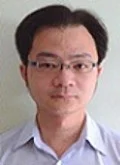
Leek Meng Lee is a senior lecturer in physics at the Nanyang Technological University. His research intersect condensed matter theory and high energy physics. He received his BSc, MSc and PhD in physics from the National University of Singapore.
About the Talk
Imagine having a mobile device that operates lightning-fast at your fingertips, uses barely any battery, and can handle computational problems that would take today's computers days to solve. That future might be closer than you think, thanks to revolutionary emerging technologies such as spintronics. Instead of relying on the flow of electrons (like a current), spintronics uses the spin of the electron itself, and offers some amazing advantages – faster processing, less power consumption, and new computing possibilities!
This talk will explore the exciting world of spintronics in a way that's easy to understand. We'll delve into the basics, discuss the potential benefits, and explore the exciting research that's paving the way for a future where computers are powered by spin!
About the Speaker
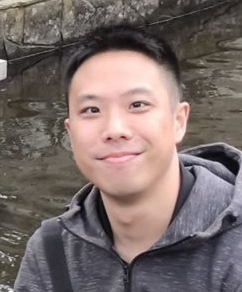
Gerard Joseph Lim is a lecturer in physics at the Nanyang Technological University with keen research interest in spintronics. He received his BSc and PhD in Physics from Nanyang Technological University.
About the Talk
What if we could recreate the power of the stars right here on Earth? Nuclear fusion — the same process that powers our Sun — holds the promise of providing nearly limitless, clean energy for future generations. Unlike fossil fuels, fusion produces no greenhouse gases and only minimal waste, making it one of the most exciting frontiers in science and energy today. In this talk, we’ll explore how fusion works, why it's so challenging to achieve on Earth, and how scientists around the world are collaborating on one of the most ambitious energy projects ever: the ITER (International Thermonuclear Experimental Reactor) in France.
About the Speaker
Kyungtak Lim is an Assistant Professor of Physics at the School of Physical and Mathematical Sciences (SPMS), and his main research focus is the theoretical and numerical modeling of plasma turbulence in fusion devices. He received a B.S. degree in Physics from Hanyang University, Korea, in 2015, an M.S. degree in Plasma Physics and Fusion (PPF) from Paris-Saclay University, France, in 2018, and a Ph.D. in Nuclear Fusion from Institut Jean Lamour (IJL), University of Lorraine, France, in 2021.
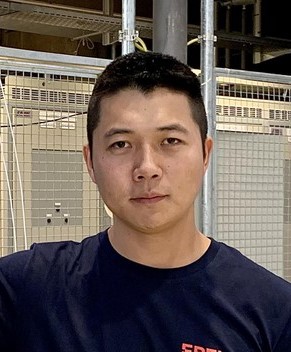
Before joining NTU in 2021, he worked as a Postdoctoral Research Fellow in Swiss Plasma Center (SPC) at École polytechnique fédérale de Lausanne (EPFL), Switzerland. He was awarded the EUROfusion Bernard Bigot Researcher Grant (ERG) in 2024 as a promising young researcher in Europe and was selected for the Early Career Collection by the editorial board of Physics of Plasmas in 2023. He also serves as a reviewer for several leading journals in nuclear fusion.
About the Talk
Magnetic fields can pass through the human body without causing harm, making them powerful tools for science and medicine. Technologies such as NMR and MRI use magnetic fields and radio waves to study atoms inside our bodies and materials around us. These atoms behave like tiny spinning magnets and respond by sending out signals at different “frequencies,” similar to musical notes.
About the Speaker
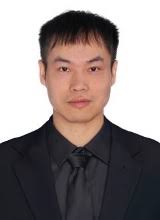
Kai Xue is an Assistant Professor at Nanyang Technological University (NTU), Singapore. He obtained his degree from the Technical University of Munich. Before joining NTU, he spent several years as a postdoctoral researcher at the Max Planck Institute for Multidisciplinary Sciences.
About the Talk
Quantum thermodynamics is an emerging field that addresses the exchange of energy and entropy between quantum systems. Such effects become increasingly significant as our systems of interest become increasingly small, and therefore depart from the thermodynamic limit. In this talk, I give an overview of how we theoretically approach quantum thermodynamics, inspired by the success of such an approach used originally to characterise entanglement.
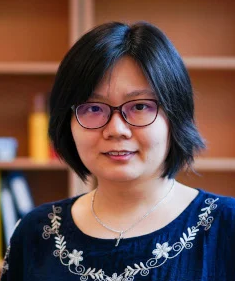
About the Speaker
Nelly Ng is Nanyang Assistant Professor of Physics at the Nanyang Technological University. Her research intersects quantum information, thermodynamics, and nanoscale quantum systems. She received her B.Sc. (Hons) from Nanyang Technological University, and a PhD in physics from Delft University of Technology.
About the Talk
Inside every smartphone and computer, information is stored as 0s and 1s and transported by electric currents, which inevitably waste energy as heat. As our world demands faster and more efficient technology, we are looking for new ways to store and move information.
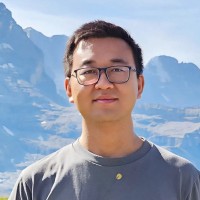
Shilei Ding is an Assistant Professor at Nanyang Technological University, Singapore. He studied Physics at Peking University, where he earned both his bachelor’s and Ph.D. degrees. Before joining NTU, he spent several years as a postdoctoral researcher at ETH Zurich.